Remote Follow-Up Scheduler
Scheduling queues that match clinical urgency
Urgency-weighted follow-up scheduling ensures post-shock patients, expiring loop recorder windows, and clinically overdue transmissions receive prioritized scheduling slots — not a number in a first-in, first-out queue.
Request Access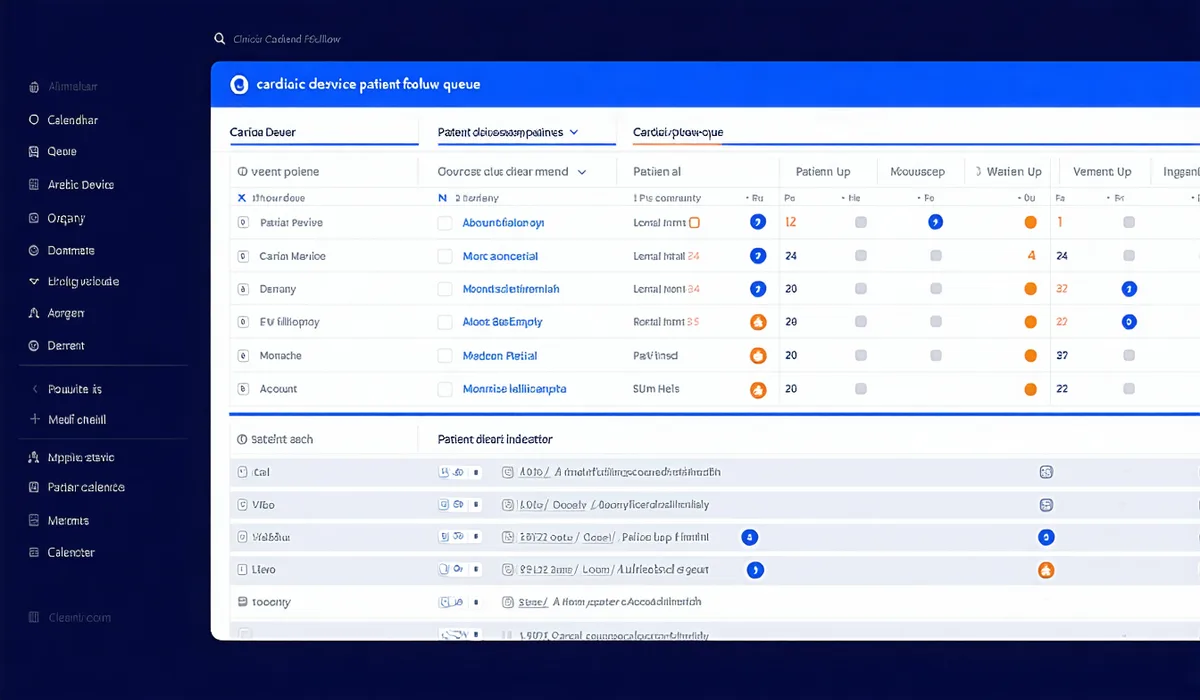
Why patients fall through scheduling queues
High-volume device clinics manage hundreds of active patients across multiple device types — each with distinct follow-up requirements, transmission schedules, and clinical acuity levels.
ILR patients get lost
Loop recorder monitoring windows extend 2–3 years. Without urgency weighting, patients with significant findings wait as long as routine 90-day pacemaker patients for follow-up contact.
Post-shock follow-up misses
Patients who received ICD shocks require prompt follow-up — often within 24–48 hours. In unstructured queues, post-shock patients mix with routine transmissions and scheduling delays occur.
No systematic gap detection
Missed transmission windows go undetected until a patient calls, a device reaches elective replacement indicator, or a gap is discovered on a routine chart audit — not proactively flagged.
Urgency-weighted scheduling for every device type
- Follow-up gap detection across all active devices under management — flags patients overdue for follow-up contact
- Post-shock and post-therapy urgency flags — automatically surfaces patients who received ICD therapy at last transmission
- ILR window expiry tracking — alerts when a loop recorder patient's scheduled monitoring window is approaching expiry without a recent transmission
- Nurse manager view by category, device type, overdue duration, and clinical priority
- Battery longevity alert integration — flags patients with device elective replacement indicator approaching
- Bulk scheduling view for coordinating high-volume follow-up sessions
Close the follow-up gap in your clinic
Request access to configure the scheduler for your device mix and follow-up protocols.