Alert Triage Engine
Cut through 10,000 alerts a month
The Alert Triage Engine replaces undifferentiated transmission lists with severity-scored priority queues — so VT storms don't compete with routine 90-day check-ins for the same clinician attention.
Request Access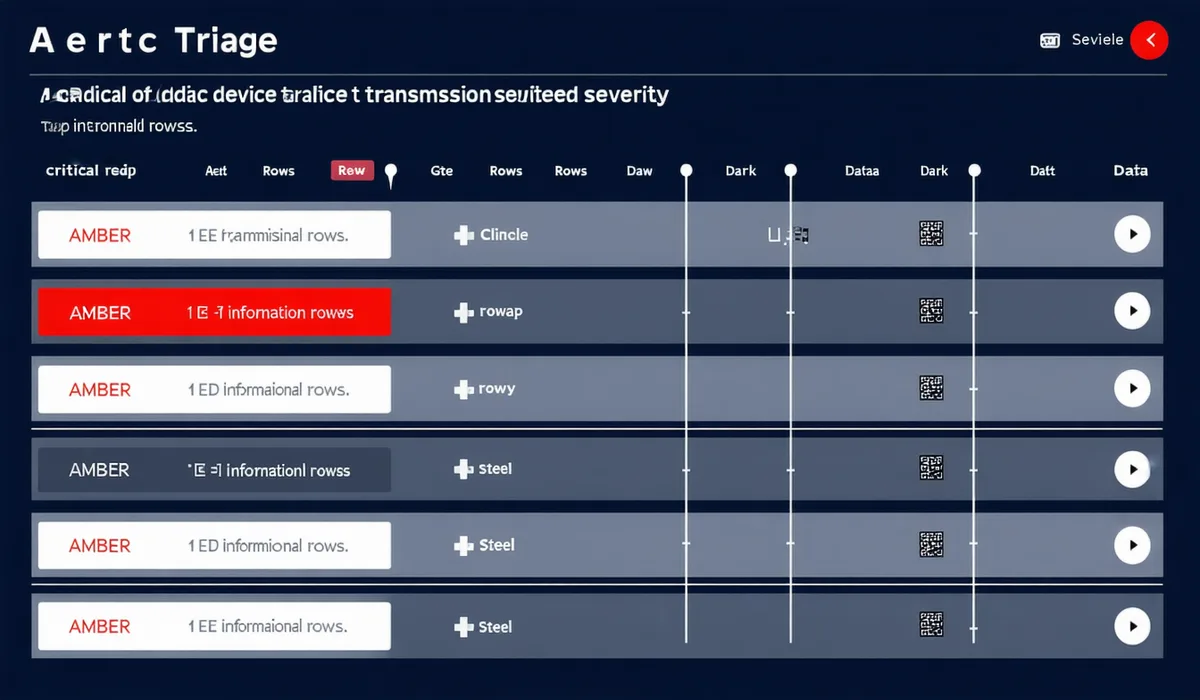
Why alert triage is the EP clinic's #1 operational problem
The core problem isn't volume — it's uniformity. Manufacturer remote monitoring platforms are optimized to transmit all device data. They are not optimized to tell a nurse manager which of 800 today's transmissions needs a phone call and which can wait until Thursday.
Clinical severity scoring, not keyword filtering
The Alert Triage Engine applies a multi-factor clinical severity model to each incoming transmission. Scoring incorporates device type, event category, device programming context, and prior event history.
VT/VF episodes, ICD shock deliveries, ATP therapy, device malfunction, complete heart block, significant pause events (>3.0 sec).
High Afib burden (>5%), pauses above lower thresholds, elective replacement indicator approach, sensing abnormalities.
Scheduled 90-day transmissions with no events, routine pacing metrics within normal parameters, battery longevity stable.
See the Alert Triage Engine in your workflow
Request access and walk through triage setup with your device mix and transmission volume.