The Implansense Platform
A platform built around how EP teams actually work
Three structured modules — Alert Triage, Remote Follow-Up, Clinical Timeline — each addressing a distinct pain point in high-volume cardiac device clinic operations.
Alert Triage Engine
Severity-scored queues replace undifferentiated transmission lists. The Alert Triage Engine evaluates each incoming transmission against a clinical severity model tuned to device type, event category, and patient context.
- Automatic severity scoring across ICD, pacemaker, CRT, and loop recorder transmissions
- Three-tier priority queue: Critical, Actionable, Informational
- VT/VF detection, shock delivery events, and pause alerts surface to the top
- Batch triage for high-volume scheduled transmission windows
- Customizable thresholds for program-specific clinical protocols
VT/VF episodes, shock deliveries, device malfunction alerts, complete heart block. Requires same-day clinical response.
Significant Afib burden, pauses over threshold, battery longevity reaching elective replacement. Requires follow-up scheduling.
Scheduled 90-day transmissions, routine pacing thresholds, no clinical events detected. Standard review queue.
Remote Follow-Up Scheduler
Intelligent scheduling queues reduce follow-up gaps. Urgency weighting ensures that post-shock patients, loop recorder windows, and clinically overdue transmissions receive prioritized scheduling slots.
- Follow-up gap detection across all active devices under management
- Urgency weighting: post-shock, post-therapy, and ILR window expiry
- Automated overdue flags for patients who miss scheduled transmission windows
- Nurse manager view by device type, follow-up category, and overdue status
- EHR-adjacent scheduling queue — no separate scheduling system required
Clinical Timeline
Longitudinal view across device events, transmissions, and clinical notes — EHR-adjacent context in one place. The Clinical Timeline surfaces the full history of a patient's implanted device without requiring EHR access during transmission review.
- Chronological event view: transmissions, alerts, therapy deliveries, follow-up notes
- Device event annotations linked to clinical context (prior notes, prior events)
- Transmission-by-transmission comparison across the monitoring window
- Exportable timeline for EP procedure planning and cardiology consultation
- EHR complement — not a replacement — for existing clinical documentation
How telemetry data flows
Implansense uses a read-only, vendor-neutral data ingestion model — device manufacturers remain the system of record for device data.
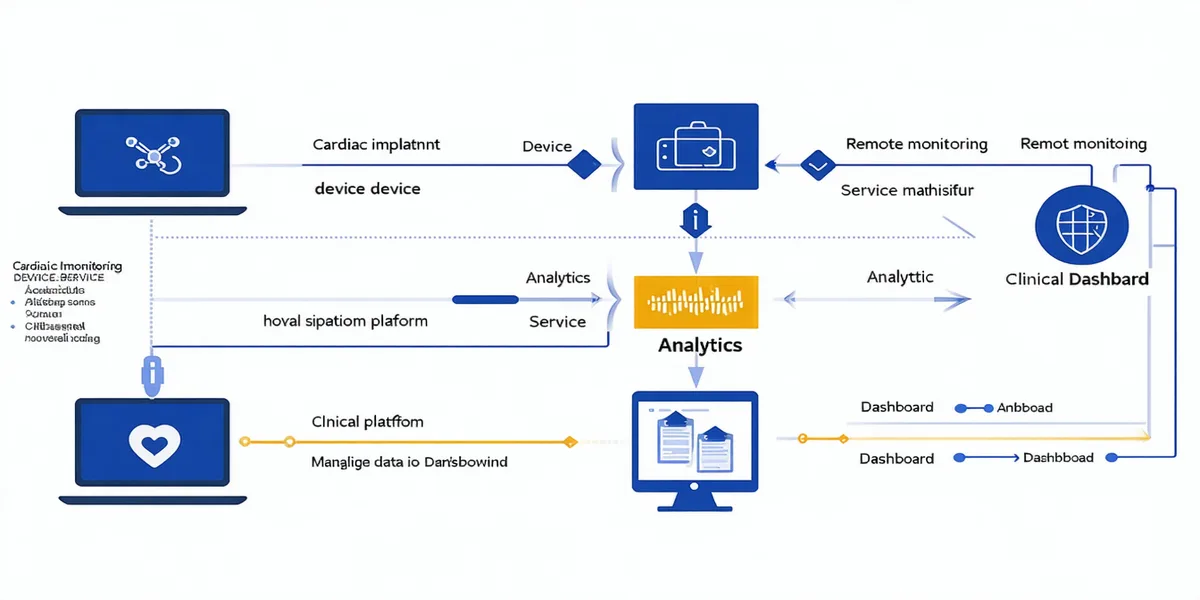
Normalized Data Model
Device-agnostic ingestion translates monitoring service data into a unified clinical event model — consistent alert classification regardless of device manufacturer.
Cloud SaaS Deployment
No on-premises agent required. Data residency options available for health system procurement requirements. SOC 2 Type II audit in progress.
Real-Time + Batch
Event-triggered transmissions (VT/shock) processed in near-real-time. Scheduled transmission batches processed on receipt. Queue updated continuously throughout the clinical day.
Cloud SaaS. No on-prem agent.
Implansense is deployed as a cloud SaaS platform. There is no on-premises software installation required — no server provisioning, no agent deployment, no IT infrastructure dependency.
Data residency options are available for health systems with data sovereignty requirements. Contact us to discuss your institution's data governance framework.
Connect to your existing stack
Implansense connects to the remote monitoring services your clinic already uses via API-based data feeds. EHR integration via HL7 FHIR and SMART on FHIR for workflow connectors.
No EHR migration required. Implansense is designed as a complement to your existing EHR — not a replacement for clinical documentation.
View IntegrationsSee the platform in your clinic's workflow
Request access to walk through Implansense with your transmission volume and device mix.