Pacemaker vs ICD vs CRT Telemetry: What Your Analytics Platform Needs to Know
Pacemakers, ICDs, and CRT devices generate fundamentally different telemetry profiles. One-size alert thresholds miss clinical context
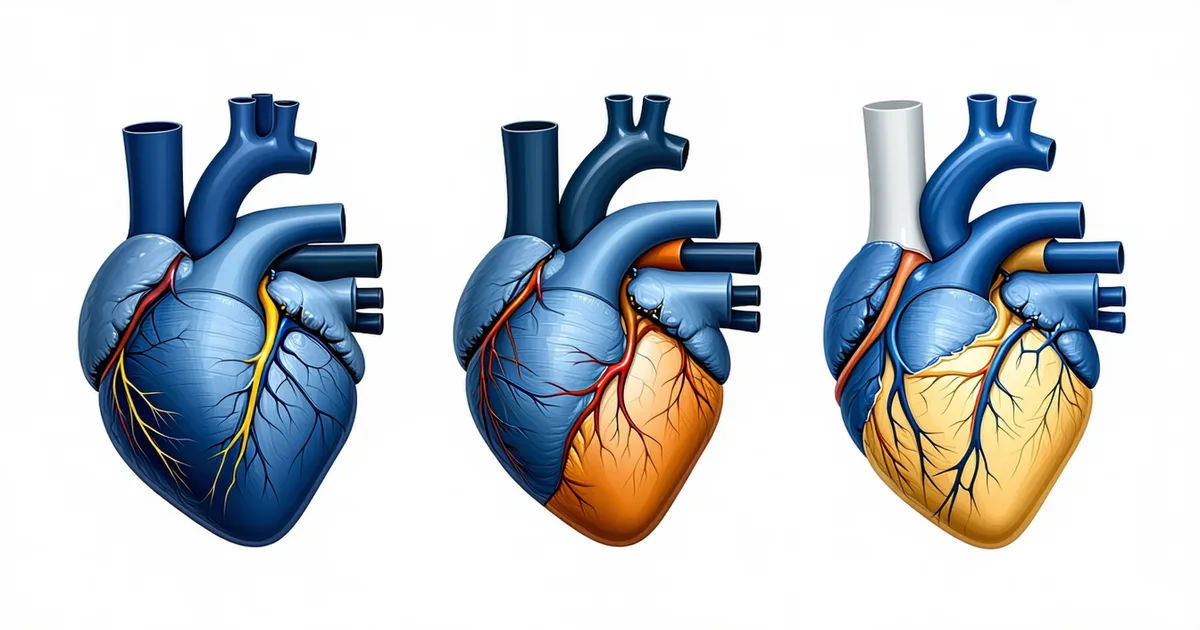
The device panel in a typical EP clinic looks nothing like a single device type. A mid-sized program managing 3,500 active patients might include single-chamber pacemakers for sick sinus syndrome, dual-chamber ICDs for ischemic cardiomyopathy with reduced ejection fraction, CRT-Ds for LBBB with advanced HF, and an expanding cohort of implantable loop recorders (ILRs) placed for unexplained syncope or cryptogenic stroke workup. Each of these device categories generates telemetry. Each generates it differently.
When a remote monitoring analytics platform applies uniform alert thresholds across all device types — treating a pacemaker lead impedance value the same way it treats an ICD high-voltage lead impedance value, or using the same AT/AF burden threshold for a CIED patient on anticoagulation as for a patient being monitored pre-ablation — it doesn't just create noise. It creates systematic blind spots. Events that matter in the context of one device type get buried because the scoring logic wasn't built to recognize the clinical difference.
Pacemaker telemetry: what the data actually signals
For pacemakers — whether a Medtronic Azure, a Biotronik Edora, or an Abbott Assurity — the primary telemetry parameters that carry clinical weight are: pacing percentage (atrial and ventricular, in dual-chamber devices), sensing amplitude trends, lead impedance (pacing leads), battery longevity projections (time to RRT and ERI), and mode switches indicating detected atrial arrhythmias.
The critical monitoring concern in a standard pacemaker patient is pacemaker dependence. For a patient with complete heart block who is 100% pacemaker-dependent, a sudden loss of capture or a significant sensing abnormality is an emergency. For a patient with sick sinus syndrome and an intrinsic escape rate of 45 bpm, a transient undersensing event carries a different clinical weight. The triage logic needs to incorporate pacemaker dependence status, not just the raw parameter value.
Pacemaker lead impedance thresholds are typically flagged outside the range of 200–2000 ohms for pacing leads. A rising impedance trend — say, climbing from 600 to 1,200 ohms over three consecutive transmissions — may suggest lead insulation changes or microfrature before it crosses the absolute threshold. A trend-aware triage engine catches this. A threshold-only engine misses the early signal.
ICD telemetry: therapy delivery and the detection algorithm problem
ICDs generate the highest-urgency telemetry profile in most device panels. A transmission containing documented VT/VF detection with delivered therapy — whether ATP (anti-tachycardia pacing) or shock therapy — requires same-day physician review without exception. The clinical questions that follow a delivered ICD therapy are immediate: Was the detection appropriate? Was the therapy effective? Has the patient had a subsequent clinical event? Is there an underlying change in substrate that warrants programming adjustment?
For ICDs — whether a Boston Scientific Resonate, Medtronic Evera, or Abbott Gallant — the triage-critical parameters include: detected and treated episode logs (VT, VF, ATP sequences, shock counts), episode electrograms (EGMs) for appropriateness review, high-voltage lead impedance (normal range typically 20–100 ohms; excursions in either direction indicate lead integrity concern), sensing amplitude, and battery status. The CRT-capable versions of these devices add CRT-specific parameters discussed below.
One underappreciated triage challenge with ICDs is inappropriate therapy detection. T-wave oversensing, lead noise, and supraventricular tachycardia (SVT) detected in the VT zone can all trigger ATP or shock therapy that was not clinically warranted. An appropriate shock in a VT storm is urgent for one set of clinical reasons. An inappropriate shock in a patient with SVT is urgent for an entirely different set of reasons — the underlying arrhythmia may need treatment, the detection programming needs adjustment, and the patient has likely experienced psychological distress and physical discomfort that requires clinical contact. The triage framework needs to handle both as critical-tier events while distinguishing them for clinical response purpose.
CRT telemetry: the heart failure dimension
CRT devices — CRT-P (pacemaker only) and CRT-D (with defibrillation capability) — add a layer of hemodynamic monitoring data that neither standard pacemakers nor standard ICDs provide. The clinical question a CRT transmission should answer is not just "is the device functioning?" but "is the patient's cardiac resynchronization therapy being delivered effectively, and is there evidence of fluid status change or worsening hemodynamic function?"
CRT pacing percentage is the central metric. The clinical target for most CRT patients is >98% biventricular pacing, based on the device literature establishing that CRT response correlates with consistent delivery of resynchronization therapy. A CRT-D patient transmitting with 88% biventricular pacing is likely experiencing frequent ventricular ectopy, atrial arrhythmia with loss of AV synchrony, or device programming that is dropping pacing delivery — all of which may need clinical investigation. This parameter should sit in the Amber or Red triage tier for most CRT patients, not the Green informational tier.
Thoracic impedance monitoring — available on devices like the Medtronic W series and Boston Scientific Resonate CRT-D — provides an indirect signal for fluid accumulation. Falling thoracic impedance tracked over consecutive transmission windows may indicate worsening fluid retention ahead of clinical symptoms. This is not a diagnostic measurement and should not be treated as one — it is a surveillance signal that needs clinical context. But in a patient with documented HF and a recent hospitalization, a falling impedance trend warrants the same urgency as a rising AT/AF burden: a callback before the patient ends up in the ED.
Loop recorders: the long-horizon monitoring problem
Implantable loop recorders — the Abbott Confirm Rx and Boston Scientific Lux-Dx being the most commonly deployed — generate a fundamentally different monitoring challenge than therapy-delivering devices. The ILR's clinical purpose is detection, not treatment. The patient has been implanted for an indication (unexplained syncope, cryptogenic stroke workup, paroxysmal AF screening) that by definition has not yet been confirmed. Transmissions are frequent — most ILRs transmit daily or near-daily — and the majority will contain no clinically significant finding.
The alert categories that matter in ILR monitoring are: detected AF episodes above a programmed duration threshold (relevant for anticoagulation decision-making in stroke workup patients), pause detection (relevant for syncope workup), high-rate episodes, and patient-activated recordings following symptoms. The triage challenge is that ILR episode detection has higher rates of artifact and detection algorithm noise than therapy-delivering devices, precisely because the detection thresholds are set more sensitively. A short AF episode detected by the ILR algorithm requires human EGM review to confirm it's not R-wave double-counting or noise artifact — it shouldn't automatically trigger a prescription change.
We're not saying ILR alerts are unreliable. We're saying that ILR episode telemetry requires a triage approach calibrated to its specific false-positive rate profile — which is meaningfully higher than ICD episode detection — and that applying ICD-style urgency weighting to every ILR AF detection will generate the same alert fatigue problem we're trying to solve. ILR follow-up scheduling requires its own protocols distinct from ICD management.
What device-type-aware analytics actually requires
A triage engine that genuinely accounts for device type differences needs the following capabilities at minimum:
Differentiated scoring parameters by device category — pacemaker, single-chamber ICD, dual-chamber ICD, CRT-P, CRT-D, ILR — with independent threshold configurations per category. The same impedance value does not carry the same clinical weight in a pacemaker lead as in a defibrillation coil.
Patient-level context weighting. A CRT-D patient's biventricular pacing percentage drop means something different if the patient is documented as HF hospitalization within the last 90 days. An ILR patient's AF episode alert means something different if they're post-stroke versus pre-ablation screening. Scoring logic that operates only on the raw parameter without patient context will produce incorrect urgency assignments at a predictable rate.
Manufacturer data normalization. Medtronic, Abbott, Boston Scientific, and Biotronik each report equivalent parameters using different field names, units, and threshold flag conventions. Cross-vendor normalization is the prerequisite for any device-type-aware scoring logic to function consistently across a mixed-vendor panel.
The EP clinic with a mixed device panel — which describes essentially every program managing more than a few hundred patients — cannot afford a platform that treats all device types as functionally identical. The clinical consequences of missed device-type context are events that sit in the wrong triage tier until a nurse happens to look closely enough to recognize the gap.
Device-type-aware triage scoring is the foundational requirement for any cardiac telemetry analytics platform serving a real-world EP program. Everything else builds on that foundation.