
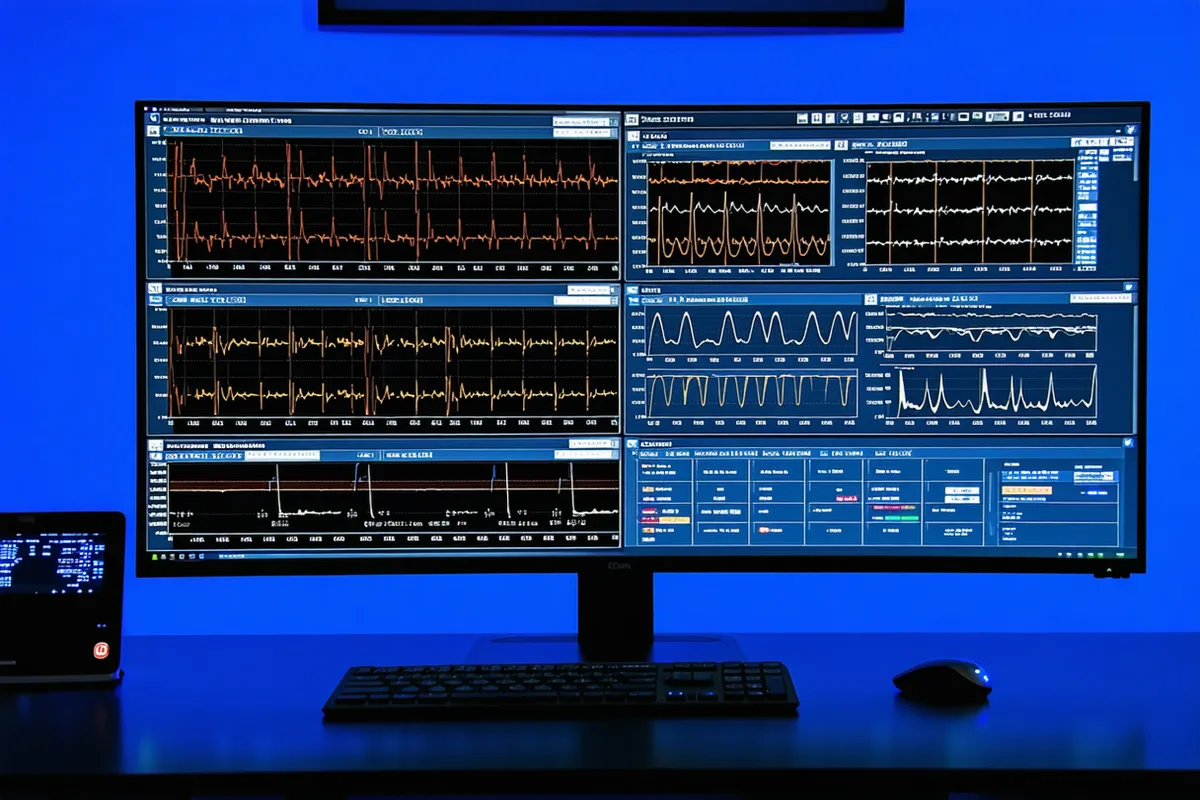
EP clinics managing 200–600 active ICM patients receive 80–300 transmissions per week. Implansense ranks each one by clinical urgency so coordinators reach the cases that matter — without reading every note first.
A busy EP clinic supporting 600 active ICM patients can receive up to 300 remote monitoring transmissions per week across Abbott, Medtronic, and Biotronik platforms.
Device coordinators spend 3–5 hours every day reviewing transmissions with no risk stratification layer — before they can determine which events actually require a physician callback.
Non-urgent alert transmissions sit in the review queue for 6–14 days on average because coordinators work through cases in arrival order rather than by clinical priority.
For every true arrhythmia event, coordinators typically encounter four artifact transmissions — motion noise, lead-sensing variability, and interference that manufacturer platforms flag identically to real findings.
Every feature in Implansense addresses a specific failure point in how EP clinics handle ICM and ILR remote monitoring today — from artifact buried in the queue to documentation steps that delay chart review.
Classifies ICM and ILR episode segments across AF burden, pauses, VT, SVT, and artifact. Each episode receives per-label confidence scores so coordinators know which findings are high-certainty and which need a closer look before escalating to a physician.
Applies morphology consistency analysis and frequency-domain noise scoring to each episode before classification runs. Artifact-tagged transmissions drop to the bottom of the worklist, so coordinators stop spending the first hour of every morning sorting through motion noise.
Weights each transmission against the patient’s device indication, diagnosis, and prior 90-day episode history. A pause event for a cryptogenic stroke patient ranks differently than the same finding for an AF burden quantification case — the worklist reflects that difference.
Generates a structured EHR addendum draft after each coordinator review — device model, implant date, classified findings with burden metrics, and recommended action tier. No manual dictation. Pilots reported this step, previously the primary cause of post-review documentation delay, dropping to under two minutes.
Delivers a per-patient true-positive and artifact rate breakdown every Monday morning, segmented by device model and indication. Clinics use it to flag patients generating predominantly artifact transmissions for an in-clinic device check before the next scheduled follow-up.
Pulls transmissions directly from Abbott Merlin.net, Medtronic CareLink Network, and Biotronik Home Monitoring Service. Coordinators authenticate once per platform; Implansense ingests new transmissions automatically without requiring separate logins to each manufacturer portal.
Implansense connects to manufacturer remote monitoring platforms, classifies each transmission, and delivers a ranked daily worklist to the device coordinator — integrated as a sidebar view inside Epic or Cerner.
Implansense connects to Abbott Merlin.net, Medtronic CareLink, and Biotronik Home Monitoring Service via FHIR R4 device observation resources and each manufacturer’s documented API. New transmissions are pulled automatically as they arrive — no manual export, no coordinator login required.
Before classification runs, a signal-quality module scores each episode for morphology consistency, R-wave amplitude stability, and frequency-domain noise. Episodes above the artifact threshold are tagged and moved to the bottom of the worklist before the coordinator ever sees the queue.
The multi-label arrhythmia classifier, trained on 2.3 million annotated ICM episode segments, assigns AF burden, pause, VT, SVT, and artifact labels with confidence scores. The clinical-context risk stratifier then weights each result against the patient’s indication, diagnosis, and recent episode history to produce a priority rank.
The coordinator sees a ranked worklist — urgent to routine — as a sidebar view inside Epic or Cerner. After review, Implansense generates a pre-formatted EHR addendum draft covering findings, burden metrics, and action tier. The alert fatigue report lands in the coordinator inbox every Monday morning without any additional steps.
At a busy EP practice supporting mixed Abbott and Medtronic patients, roughly 70% of transmissions can be identified as artifact on first visual scan — before any clinical review begins. Coordinators absorb that cost every morning.
EP clinics managing mixed device inventories must log into Abbott, Medtronic, and Biotronik portals separately. No manufacturer platform provides a cross-device prioritized worklist. Coordinators stitch together the full picture manually.
In a pilot at a single-physician EP practice in suburban Philadelphia, the device coordinator reduced her daily transmission review time from 90 minutes to 22 minutes in the first month after Implansense started pulling from Abbott Merlin.net.
We’ll walk through how Implansense handles your specific device mix — Abbott, Medtronic, Biotronik, or all three — and show you what a prioritized daily worklist looks like for a clinic your size.